




GW News: Mr Van Sebroeck, Aliplast has been successful on the market for over 40 years. How would you describe the strategic development of the company?
Xavier Van Sebroeck: Our strategy has been clear from the outset: We want to provide our customers with comprehensive support – and do so from a single location. In Lokeren, we develop and manufacture everything under one roof: facades, doors, sheet metal, arches, conservatories and much more. On request, we also take care of the painting directly in-house. This ‘one-stop shopping’ principle is a decisive advantage, because our customers can get everything from us – except the glass. This allows us to react very flexibly and deliver quickly and reliably, as we carry out all processes ourselves.
GW News: You also develop your own systems, right?
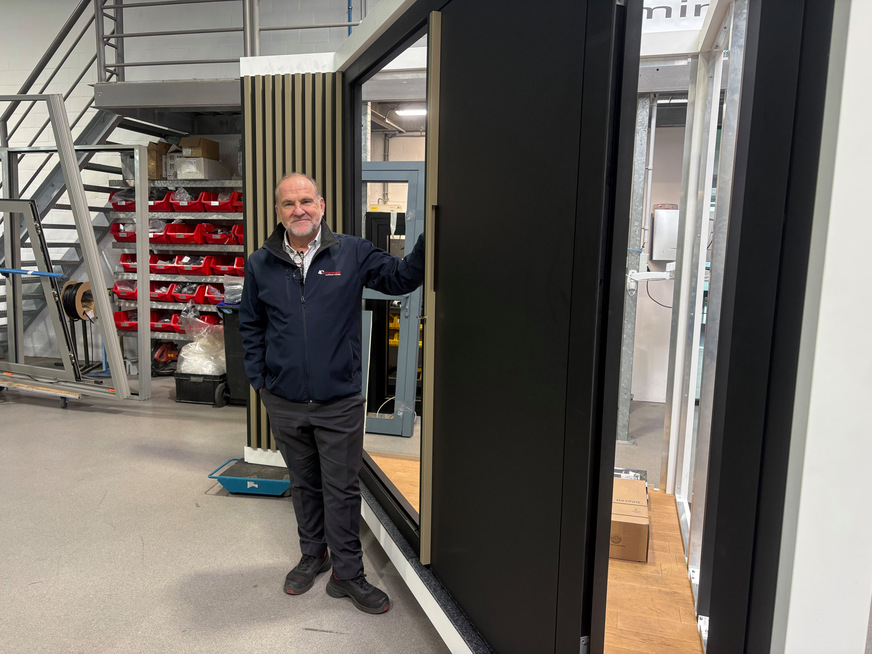
Matthias Rehberger / GW
Van Sebroeck: Yes, we have our own development department here, very close to the market and they also know the needs of our customers. If customers have a special project, we can develop, press and manufacture individual profiles for it, all in-house. In addition, we also develop new products together with our processing customers. We thus serve a broad spectrum: from commercial projects to conservatory construction and renovation.
GW News: Aliplast is part of the Corealis Group, which also includes Gutmann. Does that have advantages?
Van Sebroeck: Absolutely. This affiliation opens up many opportunities for us. Aliplast brings a wealth of experience and innovative strength to the table. The Corealis Group enables us to make better use of synergies and pool our knowledge, while also benefiting from Gutmann's expertise.
GW News: How important are innovations for Aliplast, and how do you manage to stay so close to the market?
Matthias Rehberger / GW
Van Sebroeck: We are constantly developing new systems and investing in our production. This enables us to respond quickly to market changes. A good example is our new conservatory roof, which we developed in collaboration with German fabricators and which will be launched in mid-2026. This type of partnership is typical for us.
We have also just developed a new facade, which we are currently testing. Facade elements are becoming larger and larger, and our systems are designed to meet these requirements. We recently acquired a new test bench, which now allows us to test very large elements.
GW News: Sustainability is becoming increasingly important. How does Aliplast anchor this topic in its strategy?
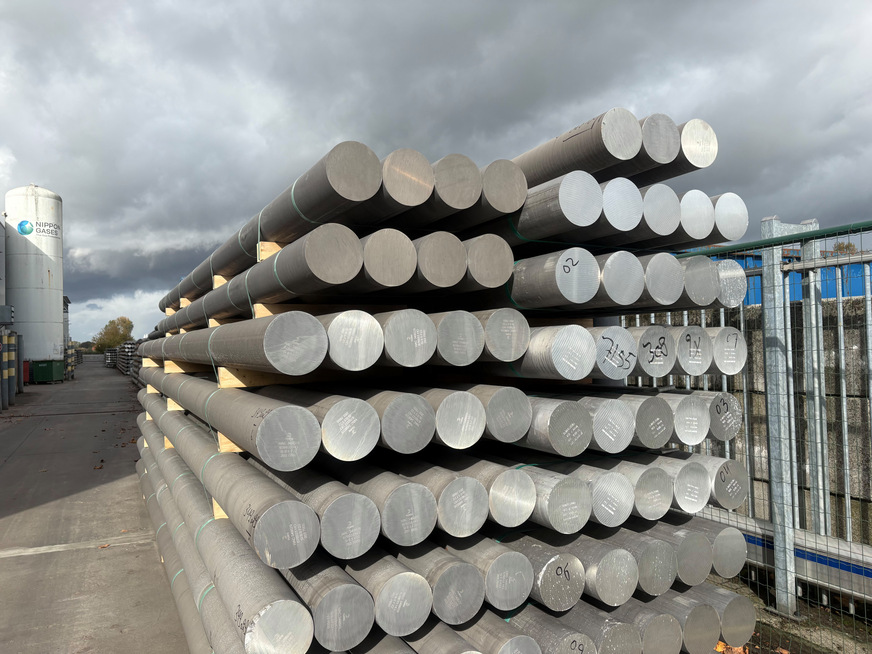
Van Sebroeck: We regularly invest in new, more energy-efficient systems for our production facilities. One focus is on reducing our carbon footprint, both in our manufacturing processes and in our products and transport. the same goes for purchasing: We are increasing green aluminium billets and the proportion of recycled materials. With our ‘Alu Loop’ project, we collect production residues directly from our customers, melt them down and return them to the material cycle.
Matthias Rehberger / GW
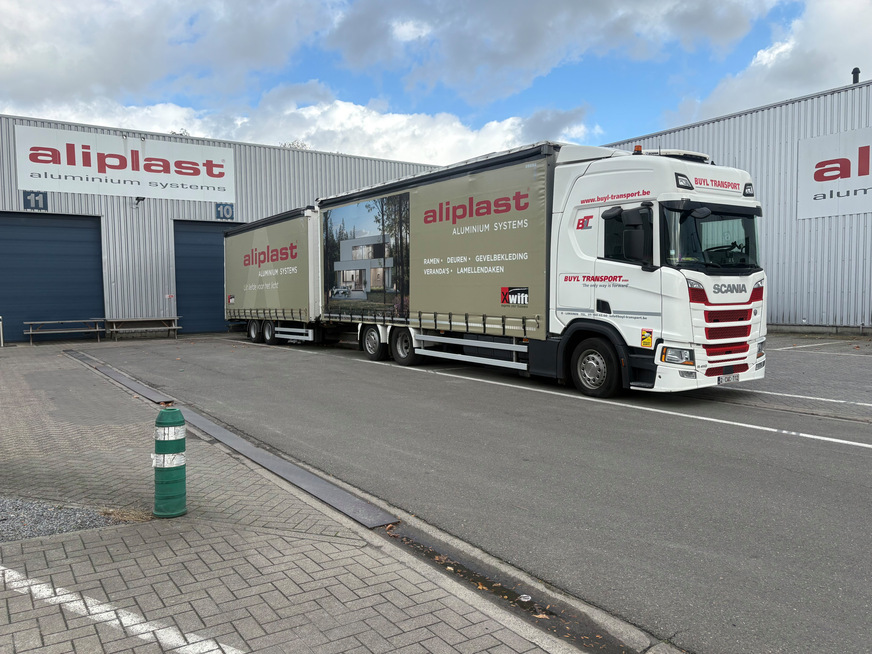
We already generate a large part of the our required electricity with large solar panels on the roofs of our halls. We also rely on an electrified vehicle fleet, including our first electric truck.
GW News: Name some of your top products.
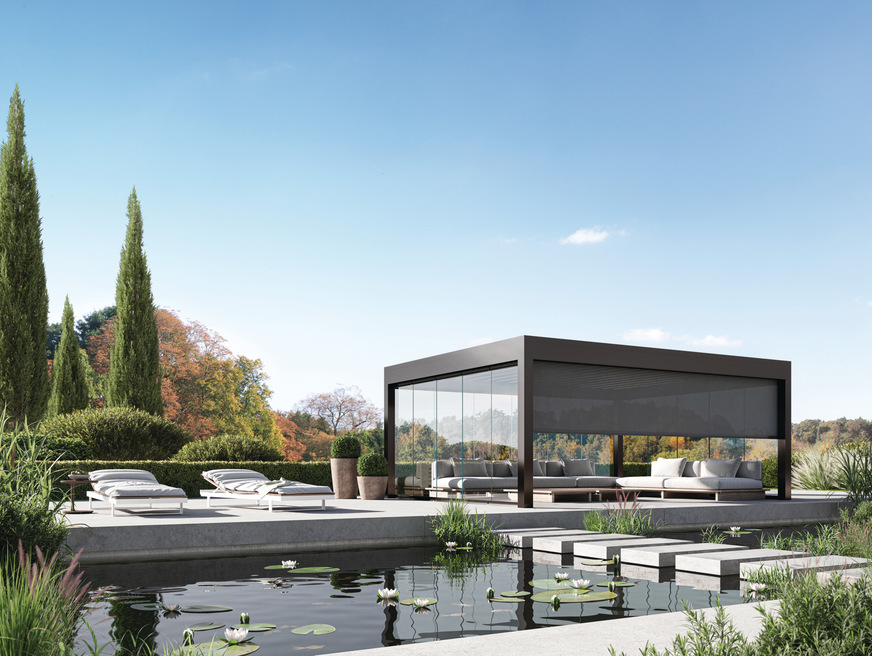
Van Sebroeck: We are particularly proud of our new MC 55 facade system, the highly insulated Star 75 door line, the Ultraglide sliding doors and the Somnium roof – an innovative aluminium flat roof that can be fitted with slats or glass and also features integrated vertical shading in cooperation with the Belgian company Wilms. On request, we can deliver the Somnium pre-assembled, saving our customers time and effort as there is no need for manufacturing. It is delivered to the metal fabricator ready for installation.
GW News: What role does digitalisation play in your product development and production?
Van Sebroeck: Digitalisation is an important part of how we work. We also support our fabricators with modern software solutions. All our systems are stored in Orgadata LogiKal, for example, and we provide Cover software for our roof systems. This enables our partners to plan and calculate their projects and place orders directly from the software. This increases efficiency, reduces sources of error and ensures a seamless connection between planning and production.
GW News: Aliplast is Cradle to Cradle certified and has multiple ISO certifications. How important are these certifications to you?
Aliplast
Van Sebroeck: They confirm our commitment to acting responsibly and sustainably. Ten of our systems are Cradle to Cradle Silver certified. We also have four ISO certificates:
• ISO 9001 for quality management
• ISO 45001 for occupational health and safety
• ISO 14001 for environmental management
• ISO 50001 for energy management
Furthermore, the Corealis Group has been awarded the Ecovadis Platinum Rating – this shows that sustainability is not just a buzzword for us, but a reality we live by.
GW News: How do you see the future of aluminium construction in the context of climate neutrality and the circular economy?
Van Sebroeck: The future lies in a combination of innovation, energy efficiency and the circular economy. Aluminium will remain a sustainable material if we use it responsibly. It is crucial to close the material cycle and further decarbonise production.
GW News: What is your goal for Aliplast?
Van Sebroeck: Our goal is to grow sustainably. We have a strong product portfolio and offer affordable systems that are complemented by comprehensive service.
We want to continue to be a reliable partner for our customers, innovative, flexible and at the heart of the market.
The interview was conducted by Matthias Rehberger.
Matthias Rehberger / GW